In this guide 6 sections
You can ask an insurer to reconsider a total-loss settlement. Start with the valuation report: the document that shows how the insurer calculated your car's value. Check the vehicle details, the comparable cars, and each adjustment. A request tied to a specific error gives the adjuster something to review; asking for a larger check without supporting records does not.
Ask for the report and the settlement breakdown
Request the full valuation report, not just the amount offered. Also ask for an itemized settlement showing additions and deductions. These answer different questions: what the insurer says your car was worth, and how it arrived at the amount payable.
Request a total-loss valuation report so you can see the data behind the offer. Washington's rules about local comparisons and settlement fees apply in Washington, not automatically in every state.
For an actual-cash-value settlement, you are checking what the car was worth before the loss. Record the loss date and the valuation date used in the report, as well as the report version and the date you received it. The relevant value is the vehicle's value before the loss. If the insurer changes the offer, ask for the revised calculation so you can see which items changed.
Check whether the report describes your car correctly
Start with facts you can verify: model year, trim, mileage, equipment, and condition before the loss. An incorrect trim level or missing feature is a clearer issue to raise than a general disagreement with the final figure. Texas TDI recommends documenting special features and using local vehicle information when you dispute a total-loss offer.
Use the blank report-reading worksheet (TXT) to connect each question to a record. These are prompts for checking facts, not assumed errors in your insurer's report.
| Item to check | Record to compare | Question to put in writing |
|---|---|---|
| Trim and equipment | Purchase paperwork, original vehicle specification, pre-loss photos | Does the report identify this trim and equipment? |
| Mileage | Dated service record or pre-loss odometer photo | What mileage did you use, and how did it affect the value? |
| Condition | Pre-loss photos, service records, inspection notes | What evidence supports this condition adjustment? |
| Comparable vehicles | Listing details, seller location, date, equipment, mileage | How did you account for these differences? |
| Settlement deductions | Itemized offer and relevant policy wording | What is this deduction for, and how was it calculated? |
Leave an item blank if you cannot verify it. Do not describe accident damage as a pre-existing condition, or claim equipment your vehicle did not have.
Find useful comparisons, not just higher prices
Look for vehicles similar to yours in the relevant market. Save the listing date, location, mileage, trim, and price alongside the listing itself. A screenshot showing only the price leaves out the information needed to judge whether the car is comparable.
There is no fixed number of listings in this worksheet. A small set of close matches can be more useful than a large set of newer cars with different equipment. If the available matches differ, identify the differences and ask how the insurer adjusted for them.
An advertised price is not proof that a car sold for that amount. Texas OPIC also cautions that recent maintenance and upgrades do not necessarily increase the payment. Submit relevant records for consideration; do not add the full cost of every repair bill to your requested value.
Separate the car's value from the check
Ask the insurer to identify the vehicle value, applicable taxes or fees, and any deductible or other deduction separately. If you keep the damaged vehicle, ask how its salvage value affects the offer. Texas TDI explains that retaining the vehicle reduces the payment by the salvage value. Check the rules that apply to your own claim before choosing that option.
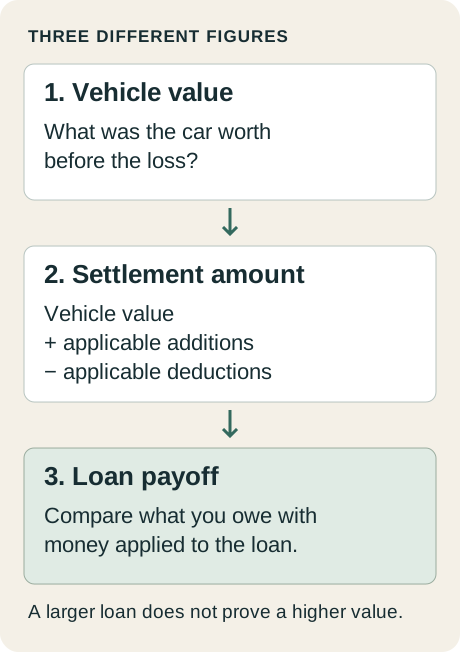
Your loan balance is a separate issue. A larger outstanding loan does not establish that the vehicle was worth more. The borrower remains responsible for a shortfall, which gap coverage may address. Whether your gap product covers a particular balance depends on its terms.
If you are deciding whether to keep the car, see owner-retained vehicle and title requirements. If the loan will not be paid in full, review the remaining balance and GAP claim separately.
Send a short request for review
List the disputed items, attach the records supporting each one, and ask for a written response. Use the version of the report you actually received. A practical request can read:
Please review the attached items in the valuation report for claim [claim number]. For each item, I have identified the report entry, the supporting record, and the correction or explanation requested. Please send an updated report if the valuation changes, or explain why an item does not change the calculation. Please also confirm the next step and expected response date.
This is an editable request, not a statutory demand letter. Keep a copy and record the response date you are given. The worksheet does not set or extend a legal deadline.
What if the insurer does not agree?
First ask which items remain disputed and whether a claims supervisor can review them. For a dispute with your own insurer, check whether your policy and applicable state rules provide an appraisal process. Do not assume your policy gives you the same right against someone else's insurer. Washington OIC treats those two situations separately.
Before paying an appraiser, confirm the process, fees, scope, and effect of the decision. In California, the appraisal process has each side pay its own appraiser and share the fee for an umpire: a neutral person who resolves differences between the appraisers. That is not a promise that an appraisal will increase your payment or recover its cost.
For unresolved questions about an insurer's handling of the claim, find your state insurance department. A regulator complaint and a valuation review are different steps; neither is submitted by downloading a worksheet.
Use our free total-loss document checklist to gather the offer, vehicle records, and correspondence before you respond. Keep your completed records on your own device and share them only with the insurer or professional you choose.
Disclaimer: TurnYourClaim is not a law firm and does not provide legal advice. This page provides general educational information only. Laws vary by state and change frequently — always consult a licensed attorney in your state for advice specific to your situation. This is not medical advice; if you have been injured, seek immediate medical attention.